 WEEK ZERO
PLAYER REPORTING & STAFF FOLLOW-UP
Your Athletes Complete Wellness Questionnaires. What Happens Next?
An athlete wellness questionnaire can tell staff how a player is feeling. Its operational value also depends on what happens afterward: who reviews the response, who follows up and how the right people receive current participation information.
By Dee Olympio, Week Zero founder and sports therapy professional. Published .
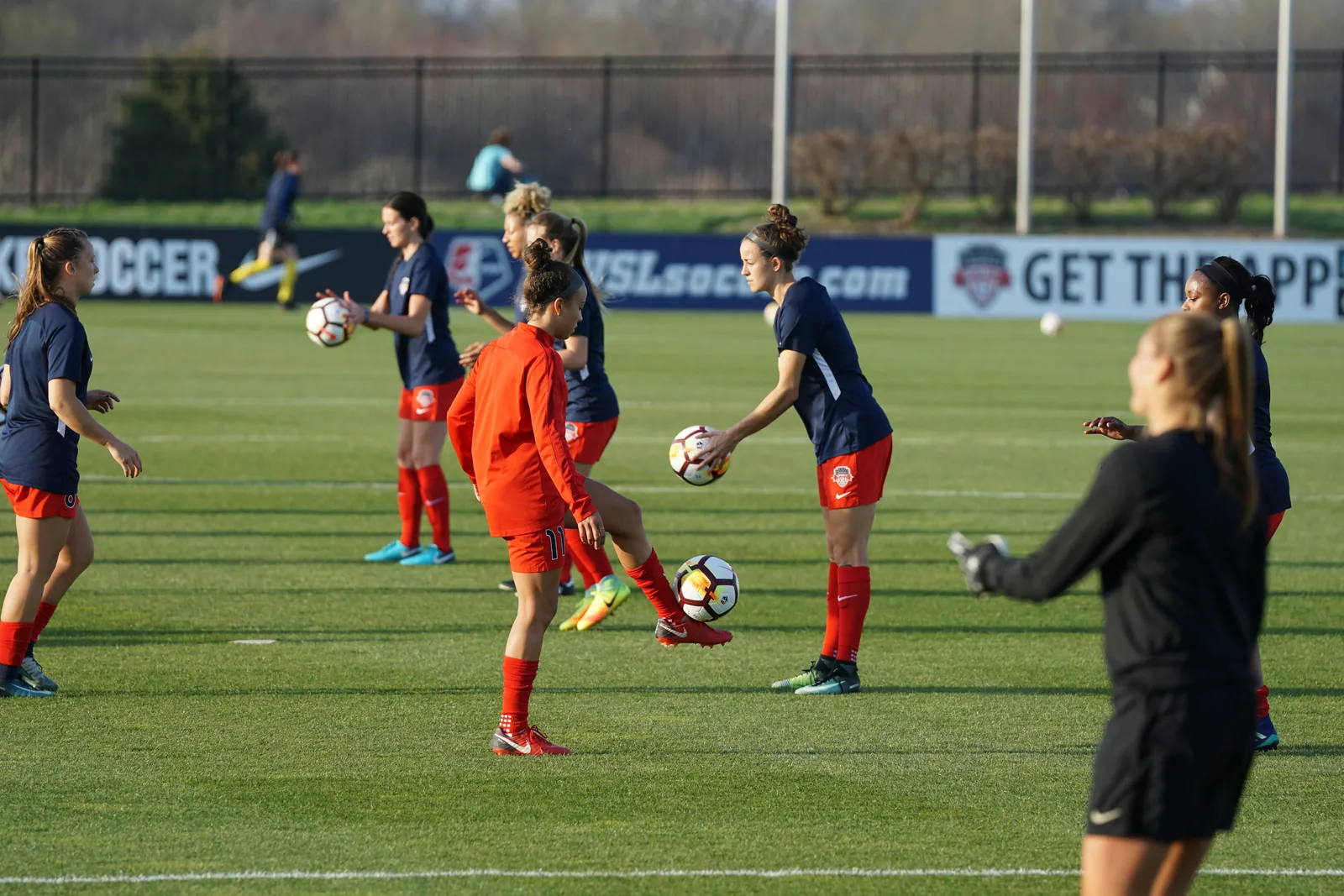
Picture a college soccer player completing a routine report on Monday morning. After that evening's match, she notices a new, nonurgent physical concern and uses the program's established reporting arrangements. Her morning answers may have been entirely accurate. They no longer tell the whole story.
The question for a program is not simply whether its questionnaire is good. It is whether the player knows how to raise the change, whether the appropriate staff member will review it and whether the resulting follow-up connects with the participation information others use.
Many departments already manage those steps well through established people, systems and conversations. A useful workflow review makes those arrangements explicit, preserves what works and identifies any handoff that depends too heavily on someone remembering.
College Soccer Availability Handoff Toolkit
Map your existing reporting process, clarify staff responsibilities and identify where follow-up or availability communication may need attention.
A questionnaire captures a moment. An availability workflow manages what happens next.
What athlete wellness questionnaires can tell you
Athlete wellness questionnaires capture self-reported information. Depending on their purpose, they may ask about perceived readiness, recovery, fatigue, sleep or physical concerns. Their answers provide the player's perspective at a particular time.
A systematic review by Saw, Main and Gastin found support for using subjective measures to monitor changes in athlete well-being in response to training.1 That supports taking self-report seriously. It does not validate every questionnaire, every question or a universal readiness score.
For a college soccer program, the practical starting point is purpose. For each question, ask: who uses this answer, what conversation might it inform and is the information necessary? Keep an effective existing measure intact rather than adding questions simply because another program asks them.
These are educational examples for staff discussion, not a validated assessment instrument or a reproduction of Week Zero's product fields:
- Readiness: “How ready do you feel for today's planned soccer activity?”
- Recovery: “How recovered do you feel since your most recent training session or match?”
- Physical concerns: “Is there a new or changed physical concern you want the appropriate staff member to know about?”
If a program uses response scales, staff should explain their meaning and keep the reference period clear. Do not turn these example prompts into a new composite score or participation threshold. The accompanying toolkit helps staff review their process; it is not a form for collecting player answers.
What a response cannot establish
A completed questionnaire is not proof that a player is medically cleared, free from injury or ready for unrestricted participation. A missing response is not evidence that nothing has changed. A report of a concern is information to review, not a diagnosis.
Keep three things distinct: what the player reported, what staff have reviewed or followed up and the current participation instruction established through the program's authorized process. “Report received” and “follow-up complete” describe different points in that process.
NCAA guidance emphasizes independent authority for team physicians and Athletic Trainers to make medical and return-to-play decisions without outside pressure.2 That guidance applies in the NCAA context; it should not be read as a rule for NAIA or other college programs. The broader workflow principles here should be applied within each institution's own requirements and authority arrangements. A reporting workflow should support that authority. It should not convert a questionnaire answer into automatic medical clearance or a team-selection decision.
Leave a route open between scheduled reports
A scheduled questionnaire gives reporting a recognizable place in the week. It cannot anticipate every change after a match, during recovery or between sessions. Players need an understood route for new information outside the next scheduled submission.
That route may already exist through the program's approved reporting system or direct contact with its sports-medicine team. Make clear who receives the update, when that route is monitored and what to do if the usual contact is unavailable. Do not imply that an online report is watched continuously unless that is actually the arrangement.
Urgent concerns should follow the institution's existing urgent-care or emergency procedures rather than wait for routine questionnaire review. A practical reporting guide can point players to those procedures without attempting to replace them.
Research on self-report implementation has identified timing, burden, buy-in and staff coordination as relevant factors.3 That study involved elite-sport participants in Australia, not a trial of this framework in US women's college soccer. Its useful lesson here is to consider how reporting fits the people and setting, not just the form.
Make the next handoff explicit
Player report → Appropriate staff review → Follow-up responsibility → Current availability information.
This map describes responsibilities, not an automated sequence. A report may require a conversation, referral through established procedures, continued follow-up or no further action after appropriate review. It does not necessarily change participation status.
Identify who reviews the information
Name a role responsible for reviewing reports, along with coverage arrangements. Define how staff know what has already been reviewed and where new information arrives. If multiple people can see a report, visibility alone does not establish who is responsible for its next step.
Separate review from follow-up ownership
The person who first reads a report may not be the person who should assess or follow it up. Agree how responsibility passes to the appropriate staff member and how that handoff is acknowledged. Decisions involving clinical assessment remain with authorized clinical personnel.
A workable handoff identifies an owner, the agreed next step and when it will be revisited. Those arrangements can live within an existing system. The aim is not to create a second record simply to demonstrate that a process exists.
Keep unresolved work distinguishable from completed work
Staff should be able to tell whether information is awaiting review, being followed up or has been addressed. Decide how coverage works when an owner is away and how staff recognize an incomplete handoff. A question appearing in a dashboard is not the same as somebody accepting responsibility for it.
Keep current availability separate from clinical detail
Coaches need usable information for planning: the current participation instruction, any relevant operational limits and where to obtain clarification. They do not automatically need the clinical narrative behind it.
Agree where the current participation record is maintained, who is authorized to update it, how the update time is shown and how changes reach the appropriate recipients. Use the institution's approved access and information-sharing arrangements. The right implementation will depend on its roles and existing systems.
A status from yesterday should not be silently treated as a fresh decision today. Equally, a planned review time passing does not itself clear or restrict a player. It identifies a point at which staff need to check the record and follow the established process.
If a coach-facing summary and clinical record are separate, make the handoff between them explicit. Avoid copying clinical notes into a general team channel to make the summary feel complete. Preserve the clinical record where it belongs and communicate only the appropriate operational information.
A fictional college soccer handoff
Illustrative example only. Harbor College and Maya Reed are fictional. The following is not a clinical recommendation, a product screenshot or a prescribed response time.
Monday, after a match: Maya raises a new, nonurgent physical concern through the program's established reporting arrangements. Her earlier routine report remains a record of how she felt when she completed it. The new report is not held until the next scheduled questionnaire.
Tuesday, 9:00 a.m.: The designated Athletic Trainer reviews the information and takes responsibility for the appropriate follow-up. Any clinical assessment and documentation remain within the department's authorized clinical process.
Tuesday, 10:00 a.m.: For this example, the authorized clinician has separately instructed that Maya not participate in Tuesday's team session pending review. The coach-facing update communicates that instruction, its timestamp, the responsible staff role and the next planned update at 2:00 p.m. It does not include her symptom narrative or assessment findings.
At the next review: The responsible staff member checks whether the participation instruction needs updating and communicates any authorized change. If the review is delayed, staff follow their coverage process; the timestamp does not automatically alter her status.
The concern itself did not automatically make Maya unavailable. The example deliberately separates the player's report, professional review and an explicit participation instruction. The same distinctions matter when follow-up leaves participation unchanged.
Review one handoff before adding another system
Use a fictional scenario in a short staff discussion. Start with one new concern after a match and trace it through your existing process. Record roles and systems, not identifiable athlete health information.
- Trace the route. Can a player explain how to raise a new concern between scheduled reports, including when the usual contact is unavailable?
- Identify the handoff. Who first reviews it, who decides the appropriate next step and who accepts follow-up responsibility?
- Find the current record. Where would staff check today's authorized participation information and its last update?
- Test the communication. Does each recipient receive useful information without unnecessary clinical detail?
- Preserve what works. Identify effective arrangements before choosing one improvement, an owner and a review date.
You may discover that the process is already clear and only needs documenting. You may find a coverage gap or two competing copies of the current status. Neither finding automatically requires new software.
The free College Soccer Availability Handoff Toolkit provides a reporting framework, handoff map, responsibility worksheet, fictional communication example and action plan. No registration or email address is required. Use it to review the process without entering identifiable athlete health information.
Download the free toolkit (PDF)
For the wider operational context, see How to Track Player Availability in College Soccer. For the role of self-reporting alongside other information, see How to Monitor Soccer Player Readiness Without GPS.
Where Week Zero fits
Week Zero connects player reporting, staff visibility, follow-up and current availability. Players can report readiness, recovery and physical concerns throughout the working week. Staff can review the relevant context within role-appropriate workflows.
It does not diagnose injuries, predict injuries or automatically clear players. The worksheets do not imply that every suggested process is automated by Week Zero.
If your program is reviewing how those handoffs fit together, explore the Week Zero workflow. The useful starting point remains the same: what happens after a player reports?
Sources and scope
- Saw AE, Main LC, Gastin PB. Monitoring the athlete training response: subjective self-reported measures trump commonly used objective measures: a systematic review. British Journal of Sports Medicine. 2016;50:281-291. doi:10.1136/bjsports-2015-094758. Supports the value of subjective monitoring; does not validate this toolkit or establish medical clearance.
- NCAA. Athletics Health Care Administration and Medical Oversight. Accessed October 19, 2026. Supports independent medical and return-to-play authority.
- Saw AE, Main LC, Gastin PB. Monitoring Athletes Through Self-Report: Factors Influencing Implementation. Journal of Sports Science & Medicine. 2015;14:137-146. Qualitative research on implementation in elite sport, not evidence of outcomes from Week Zero.
The workflow recommendations and fictional example are an educational synthesis. No improvement in injury rates, performance or availability is claimed.